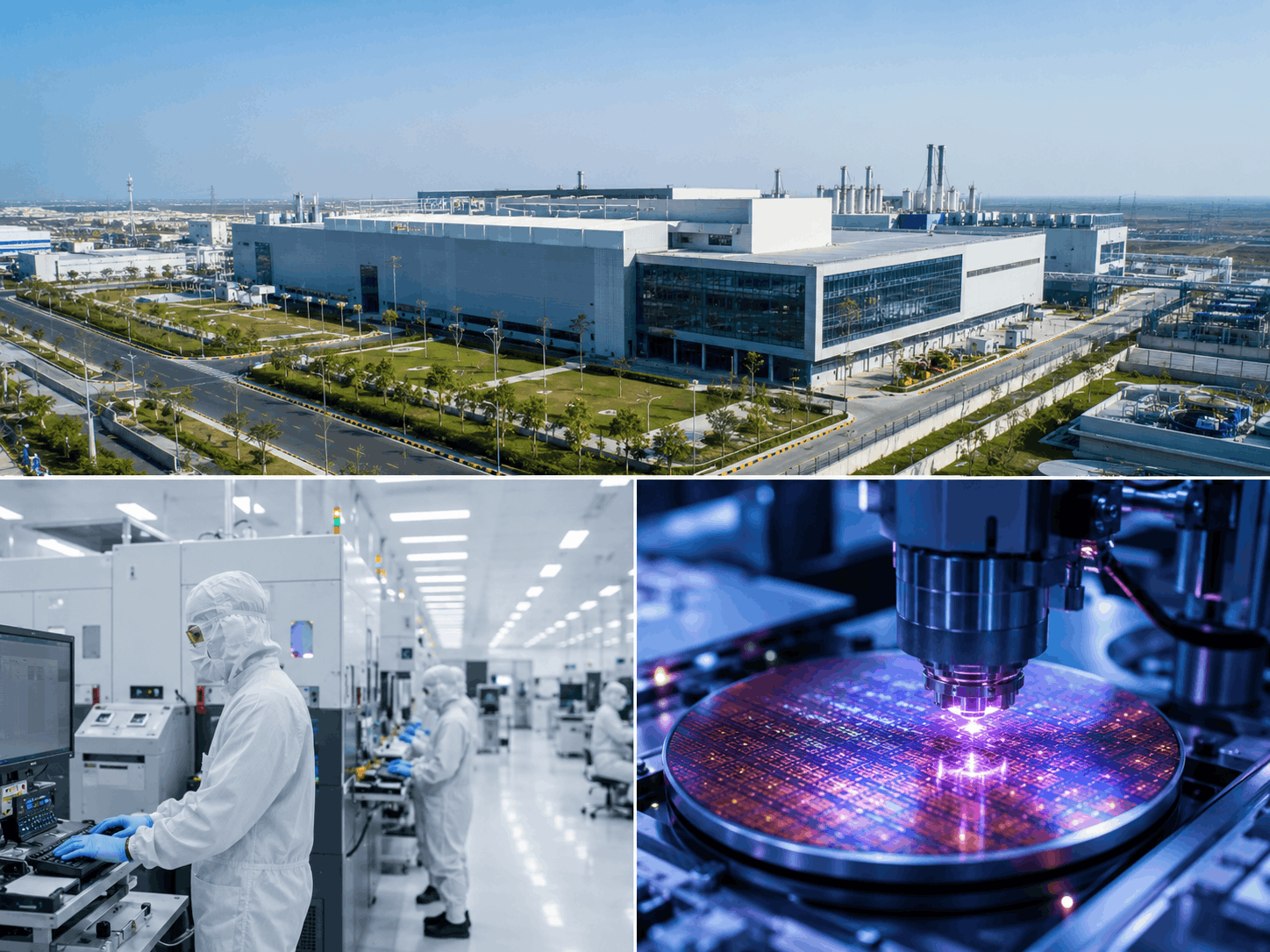

Tata Semiconductor Plant in Dholera: What It Means for India's Future
India is taking important steps to strengthen its semiconductor industry, and one of the biggest projects in this effort is the Tata Semiconductor Plant being developed in Dholera Special Investment Region (SIR), Gujarat.
Semiconductors, often called "chips," are used in almost every electronic device today. Smartphones, laptops, cars, televisions, medical equipment and even artificial intelligence systems rely on semiconductor chips to function. As demand for these products continues to rise worldwide, countries are investing heavily in domestic semiconductor manufacturing.
India is also working to build a stronger semiconductor ecosystem, and the Tata Semiconductor Plant in Dholera is expected to play an important role in this journey.
What is the Tata Semiconductor Plant?
The Tata Semiconductor Plant is a semiconductor fabrication facility, commonly known as a "fab," being developed by Tata Electronics in partnership with Taiwan-based Powerchip Semiconductor Manufacturing Corporation (PSMC).
The facility is expected to manufacture semiconductor chips used in sectors such as automotive electronics, consumer electronics, industrial equipment, telecommunications and computing.
The project is considered one of the most important developments in India's semiconductor sector and is expected to contribute to the country's long-term technology and manufacturing goals.
Project Overview
Why Was Dholera Selected?
Dholera Special Investment Region is one of India's largest planned industrial smart city projects. The city is being developed with modern infrastructure to support manufacturing, logistics and technology-driven industries.
Several factors make Dholera an attractive location for semiconductor manufacturing:
- Large industrial land availability
- Planned smart city infrastructure
- Reliable utility networks
- Future-ready industrial planning
- Strong connectivity projects
- Government support for industrial growth
The region is also benefiting from major infrastructure projects such as the Ahmedabad-Dholera Expressway and Dholera International Airport. These developments are expected to improve transportation and logistics, making it easier for industries to operate efficiently.
For large-scale manufacturing projects such as semiconductor fabrication facilities, access to reliable infrastructure is extremely important, and Dholera has been designed with these requirements in mind.
What Are Semiconductors?
Semiconductors are tiny electronic components that control the flow of electricity in electronic devices. They are the foundation of modern technology and are found in products used every day.
Semiconductor chips are commonly used in:
- Smartphones
- Computers and laptops
- Smart televisions
- Electric vehicles
- Medical equipment
- Industrial machinery
- Telecommunications systems
- Artificial intelligence applications
Without semiconductors, many modern technologies would simply not function.
As the world becomes more connected and digital, the demand for semiconductor chips continues to grow rapidly.
How Are Semiconductor Chips Made?
Semiconductor manufacturing is one of the most advanced industrial processes in the world.
The process begins with highly purified silicon, which is converted into thin wafers. These wafers then go through multiple manufacturing stages before becoming finished semiconductor chips.
Some key stages include:
Lithography
Microscopic circuit patterns are transferred onto silicon wafers using advanced equipment.
Deposition
Special materials are added to the wafer surface to create electronic structures.
Etching
Unwanted material is removed to form circuit patterns.
Testing
The wafers are tested to ensure quality and performance.
Packaging
Finished chips are packaged and prepared for use in electronic products.
Because the process requires extreme precision, semiconductor manufacturing takes place inside highly controlled cleanroom environments where dust particles and contaminants are carefully managed.
Why Is Semiconductor Manufacturing Important?
Semiconductors have become a strategic industry for countries around the world.
Recent global supply chain disruptions highlighted the importance of having reliable access to semiconductor chips. Many industries experienced production delays because of chip shortages.
Building domestic semiconductor manufacturing capabilities can help countries:
- Improve supply chain security
- Reduce dependence on imports
- Support domestic industries
- Encourage innovation
- Create skilled jobs
- Attract technology investments
For India, strengthening semiconductor manufacturing is considered an important step toward supporting long-term economic and technological growth.
Economic Benefits of the Tata Semiconductor Plant
Large industrial projects often create economic benefits beyond the manufacturing facility itself.
The Tata Semiconductor Plant is expected to contribute to:
- Increased industrial investment
- Growth of supporting industries
- Development of supplier networks
- Expansion of logistics services
- Higher demand for technical skills
- Regional economic development
Semiconductor facilities often encourage other companies to establish operations nearby, creating industrial clusters that can generate long-term economic activity.
As the ecosystem grows, additional businesses involved in manufacturing, engineering, research and support services may also invest in the region.
Job Opportunities and Skill Development
One of the most significant benefits of the project is the potential creation of employment opportunities.
Semiconductor manufacturing requires professionals with expertise in a wide range of technical fields.
Potential career opportunities may include:
- Electronics Engineering
- Electrical Engineering
- Mechanical Engineering
- Chemical Engineering
- Process Engineering
- Manufacturing Operations
- Automation and Robotics
- Data Analytics
- Quality Assurance
- Facility Management
In addition to direct jobs within the semiconductor facility, indirect employment opportunities may arise in:
- Construction
- Logistics
- Transportation
- Maintenance
- Security Services
- Industrial Support Services
The project may also encourage educational institutions and training centers to develop specialized semiconductor-related programs to meet future workforce demands.
Impact on India's Semiconductor Mission
India has launched several initiatives aimed at encouraging semiconductor manufacturing and building a complete semiconductor ecosystem.
The Tata Semiconductor Plant aligns with these efforts by helping to expand domestic manufacturing capabilities.
The project could contribute to:
- Increased chip production within India
- Development of semiconductor expertise
- Attraction of global technology partners
- Growth of electronics manufacturing
- Strengthening of industrial supply chains
As more semiconductor-related investments are announced, India could gradually strengthen its position in the global semiconductor industry.
What Could This Mean for Dholera?
The semiconductor facility has the potential to become a major milestone in Dholera's development journey.
Large technology investments often attract additional industries, suppliers and service providers. This can lead to further infrastructure development and increased economic activity.
Potential long-term benefits for Dholera include:
- Growth of advanced manufacturing industries
- Increased domestic and foreign investment
- Expansion of industrial infrastructure
- Development of technology-focused businesses
- Higher demand for skilled professionals
- Strengthening of Dholera's industrial ecosystem
Combined with ongoing infrastructure projects, the semiconductor plant could help position Dholera as one of India's emerging technology and manufacturing destinations.
Future Outlook
The Tata Semiconductor Plant represents more than just a manufacturing project. It reflects India's broader ambition to become a stronger participant in the global semiconductor industry.
As demand for semiconductors continues to increase worldwide, investments in domestic chip manufacturing are becoming increasingly important.
The success of projects such as the Tata Semiconductor Plant could encourage further investment in advanced manufacturing, technology development and industrial innovation.
For Dholera, the project has the potential to support long-term industrial growth and contribute to the region's emergence as a major economic and technology hub in Gujarat.
Frequently Asked Questions (FAQs)
What is the Tata Semiconductor Plant in Dholera?
The Tata Semiconductor Plant is a semiconductor fabrication facility being developed by Tata Electronics in Dholera SIR, Gujarat, to support domestic chip manufacturing.
Who is Tata Electronics partnering with for the project?
Tata Electronics is partnering with Taiwan-based Powerchip Semiconductor Manufacturing Corporation (PSMC).
Why was Dholera selected for the semiconductor plant?
Dholera offers industrial infrastructure, large land availability, planned smart city development and improving transportation connectivity, making it suitable for advanced manufacturing projects.
What are semiconductors used for?
Semiconductors are used in smartphones, computers, vehicles, medical devices, industrial machinery, telecommunications equipment and many other electronic products.
Will the Tata Semiconductor Plant create jobs?
Yes. The project is expected to generate both direct and indirect employment opportunities across engineering, manufacturing, logistics and support sectors.
How does the project support India's semiconductor industry?
The facility can help increase domestic chip production, strengthen supply chains, attract investment and support the growth of India's semiconductor ecosystem.
What impact could the project have on Dholera?
The project could attract additional investments, encourage industrial growth, create employment opportunities and strengthen Dholera's position as an emerging technology and manufacturing hub.